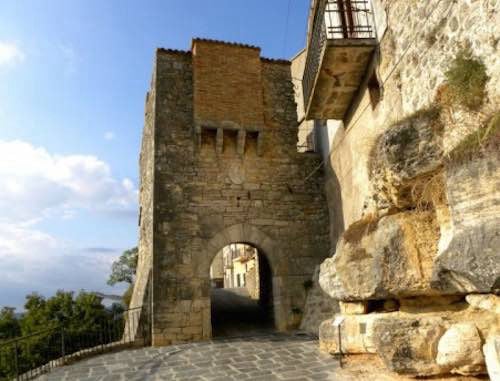
An beautiful place
High on a hill top the city offers a great view of the Corbara Lake.
The city itself is a well maintained typical middleage Italian town that gives a good impression of how close people lived in the 13-14th centry.
Tucked away in the rolling green hills of Umbria, Civitella del Lago is a small village that overlooks one of the most breathtaking views in central Italy: the shimmering expanse of Lake Corbara, a man-made lake on the Tiber River. Though modest in size, Civitella’s location, historical depth, and enduring traditions make it a remarkable example of rural Italian heritage. Its name—Civitella, meaning “little city,” and del Lago, “of the lake”—reflects both its intimate charm and its connection to the surrounding landscape.
Ancient Origins and Strategic Location
The history of Civitella del Lago is closely tied to its strategic position. Located on a hilltop between Orvieto and Todi, two powerful Etruscan and later Roman centers, Civitella was well-positioned to monitor travel and trade along the Tiber River valley. Although there is limited written documentation of the village in the pre-medieval period, archaeological findings and nearby Etruscan and Roman ruins suggest that the area was occupied as far back as the Iron Age.
The hills around Civitella offered natural defense, fertile land, and access to water—ideal conditions for settlement. During the Roman era, the area likely served as an agricultural zone, supporting larger urban centers nearby. Its proximity to the Tiber made it part of important trade routes that connected Umbria with Rome and the Adriatic coast.
Medieval Development
Civitella del Lago as we know it today began to take form in the Middle Ages, when hilltop villages were fortified against banditry and political instability. During this time, many small communities in central Italy constructed walls, towers, and gates to protect their populations. Civitella’s elevated position and surrounding forestland made it both defensible and self-sufficient.
The village was part of the territorial disputes between major regional powers, including Orvieto, Todi, and the Papal States. At various points, it came under the influence of different noble families and church authorities. Despite these power struggles, the town maintained a small, close-knit population centered on farming, religious life, and local trade.
By the 13th and 14th centuries, Civitella had developed a clear urban structure, with narrow stone-paved streets, clustered homes, and a central square. Like many Umbrian towns, it was built in harmony with the landscape, using local stone and traditional techniques that have helped it endure for centuries.
Cultural Identity and Rural Life
For much of its history, Civitella del Lago was a rural agricultural community, relying on olives, grapes, grains, and livestock. The rhythms of village life followed the seasons, the church calendar, and the harvest cycles. Traditions were passed down through families, and the town’s social structure was rooted in kinship, land ownership, and religious practice.
The church of San Donnino, dedicated to the village’s patron saint, played a central role in local identity. Religious festivals, saints’ days, and processions brought the community together, reinforcing shared values and cultural continuity.
During the 19th and early 20th centuries, Civitella experienced economic hardship and depopulation, as many Italians from rural areas migrated to cities or emigrated abroad in search of work. Despite these changes, the village retained its architectural integrity and cultural heritage.
Transformation and the Creation of Lake Corbara
A major turning point in Civitella’s modern history came in the 1950s and 1960s, when the Italian government constructed a hydroelectric dam on the Tiber River, creating Lake Corbara. This artificial lake was built to produce energy and manage water resources, but it also dramatically altered the landscape below the village.
Far from damaging the village, the new lake transformed Civitella’s fortunes. Perched above the lake’s northern shore, the town now enjoys one of the most breathtaking panoramic views in Umbria—a stunning sweep of blue water, wooded hills, and distant hill towns. This natural beauty, combined with the town’s historical charm, has attracted visitors, artists, and second-home owners from Italy and abroad.
As a result, Civitella del Lago has undergone a kind of cultural revival. Many of its old homes have been carefully restored, local crafts and traditions have been preserved, and new residents have brought fresh life to the community while respecting its heritage.
Modern Significance and Sustainable Tourism
Today, Civitella del Lago is known for its tranquility, beauty, and authenticity. It is not a tourist hotspot, but rather a destination for those seeking an immersive experience of Umbrian culture. Small galleries, artisan shops, and agriturismo farms offer visitors a taste of traditional life in a timeless setting.
The town is also a center for cultural exchange. International residents have helped organize festivals, concerts, and exhibitions, fostering connections between local traditions and global perspectives. Events such as the Sagra della Lumaca (snail festival) and art shows highlight the town’s commitment to celebrating its identity while embracing the future.
In a region celebrated for hill towns like Assisi, Spoleto, and Orvieto, Civitella del Lago stands out for its sense of peace and community. It exemplifies the Umbrian ideal of “slow living”—an approach that values connection to place, respect for nature, and a mindful pace of life.
Conclusion
Civitella del Lago may be small in scale, but its historical depth, cultural resilience, and natural beauty make it a place of real significance. From its ancient roots and medieval walls to its role in modern rural revitalization, the town tells a powerful story of continuity and transformation. It is a living example of how Italy’s lesser-known villages preserve not just history, but a way of life that continues to inspire those who visit—and those who stay.
High on a hill top the city offers a great view of the Corbara Lake.
The city itself is a well maintained typical middleage Italian town that gives a good impression of how close people lived in the 13-14th centry.
Below shows the location of Civitella del Lago.
There are several parking options in the city.