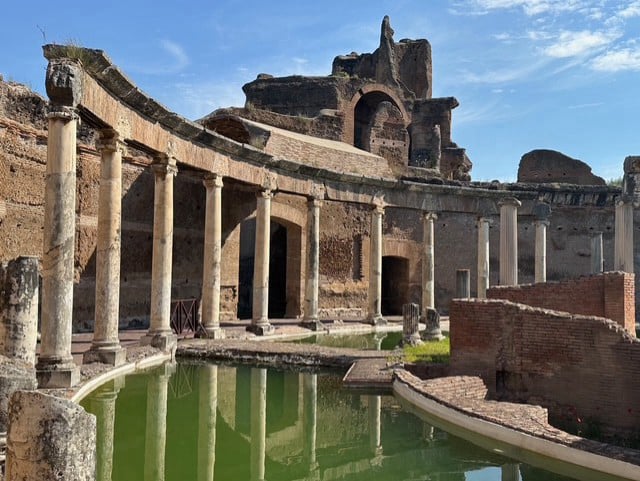
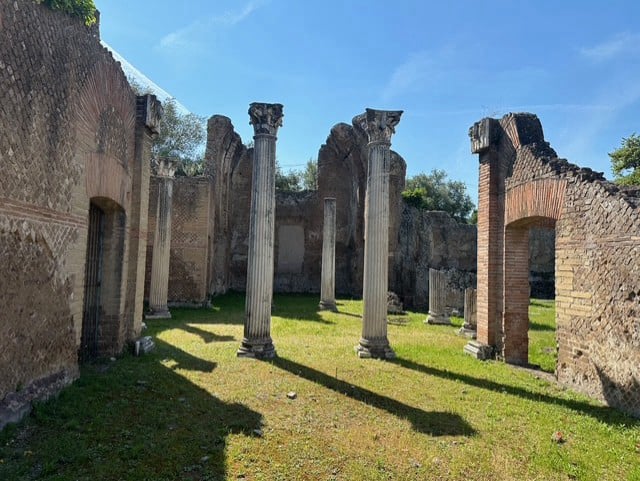
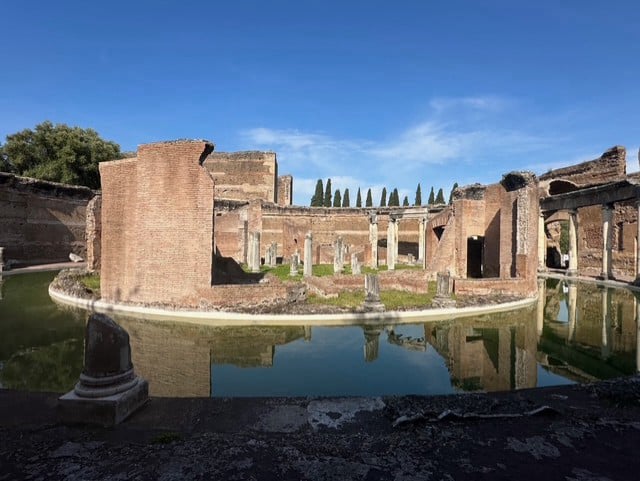
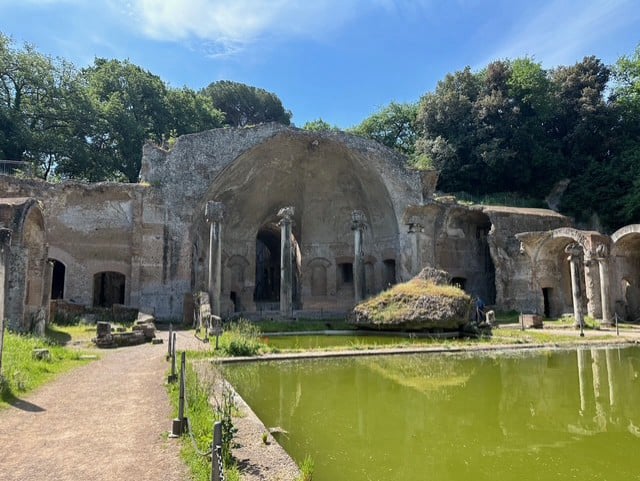
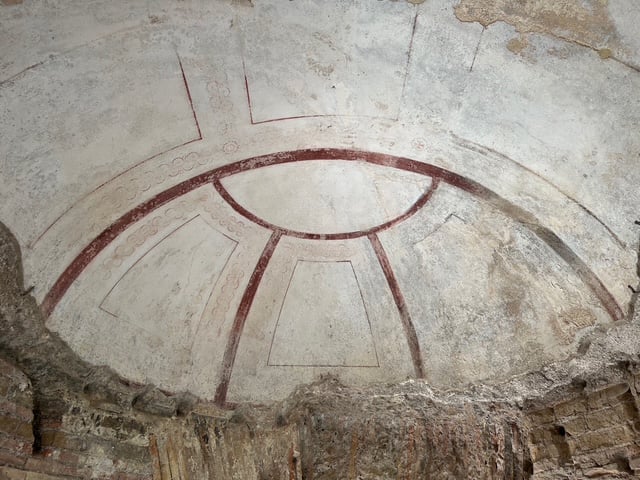
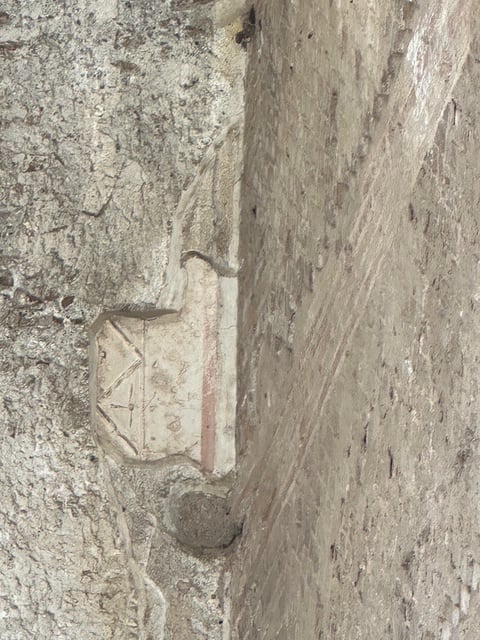
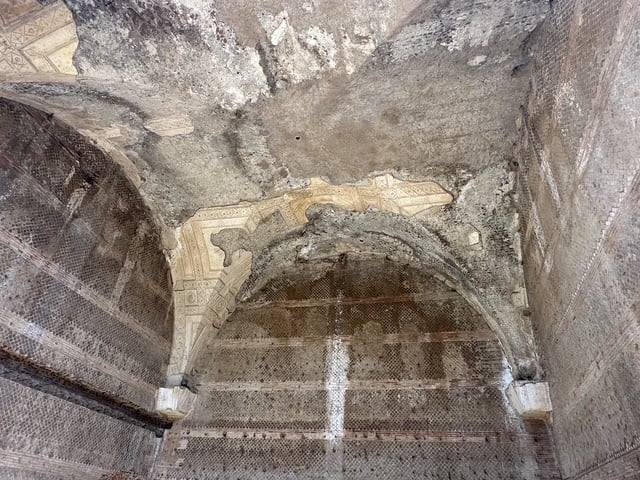
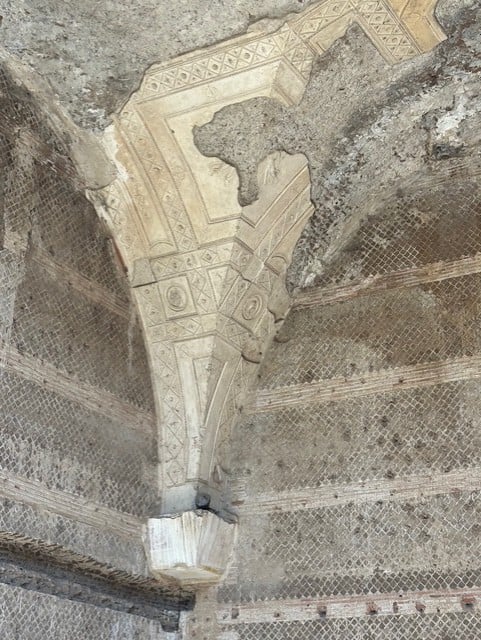
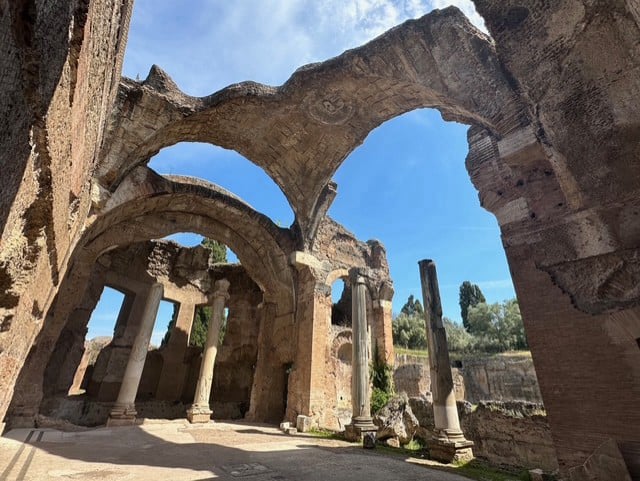
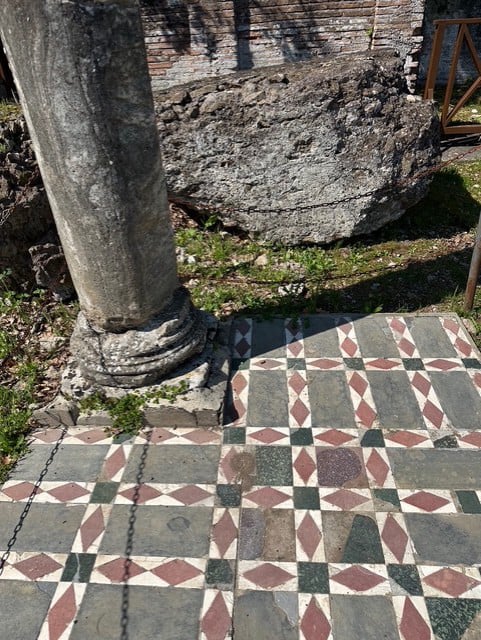
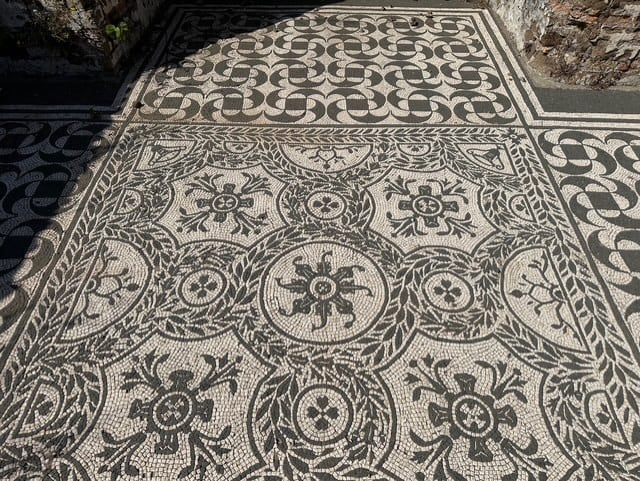
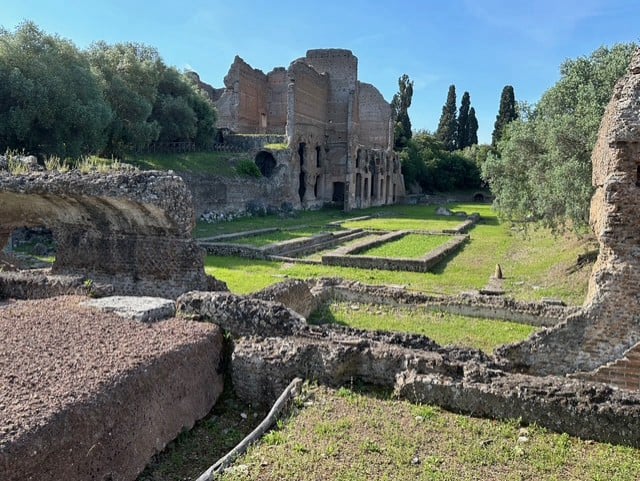
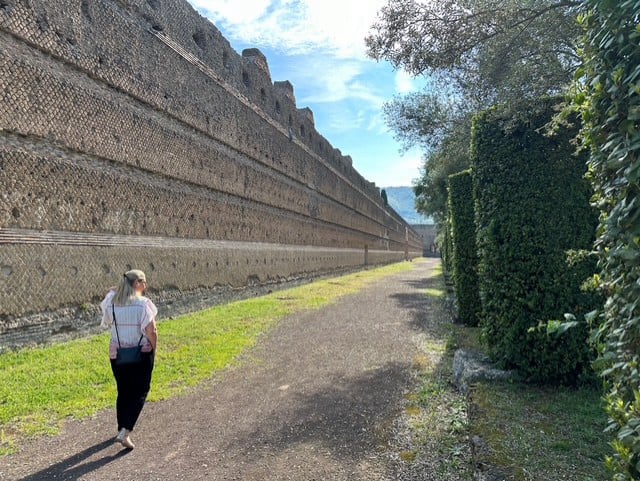
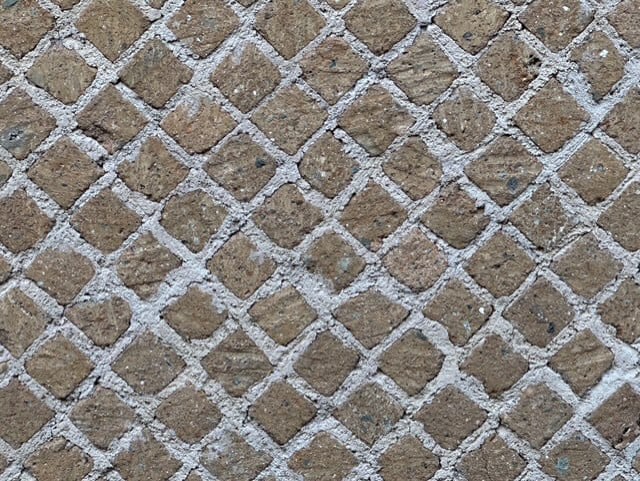
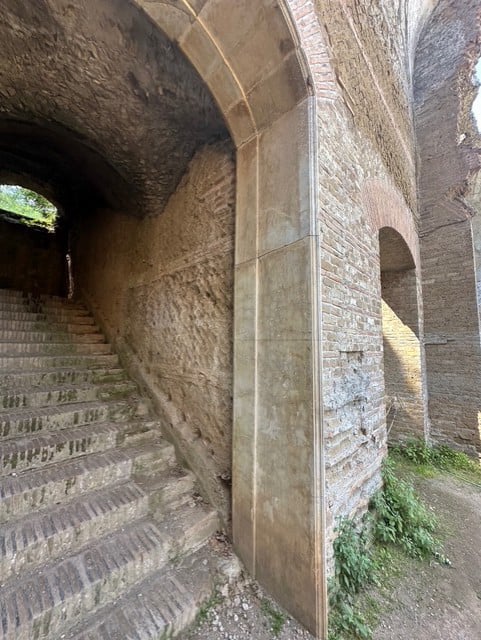
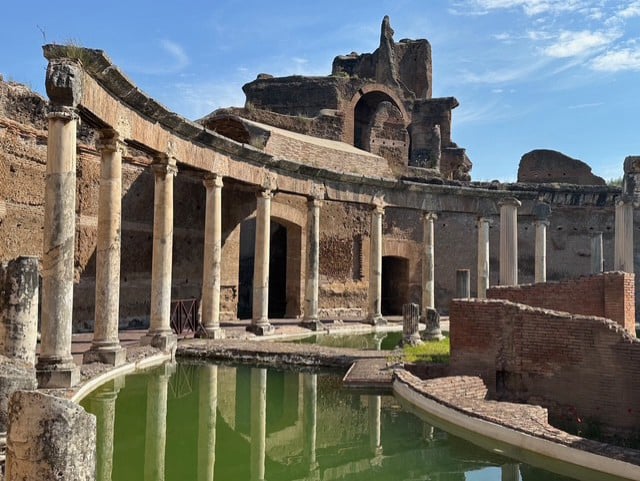
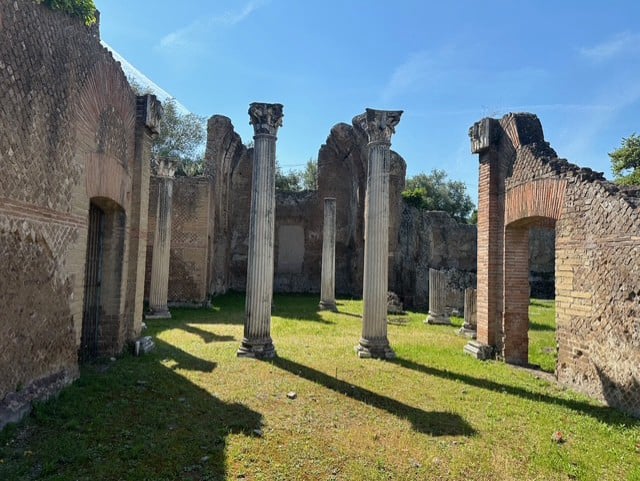
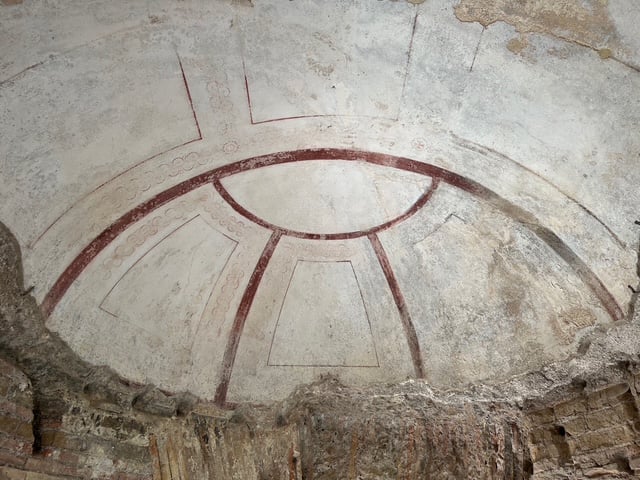
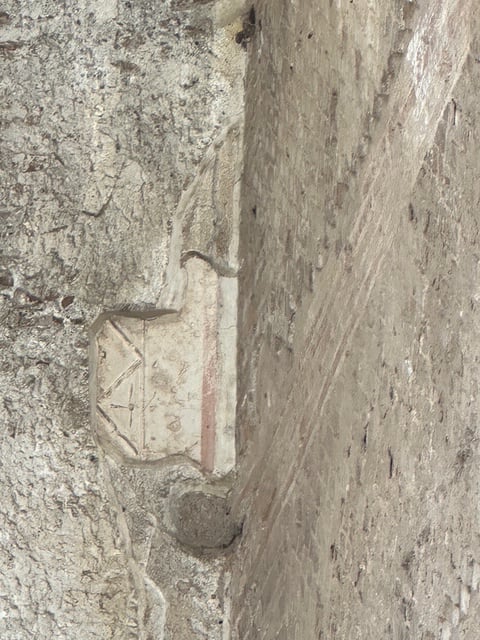
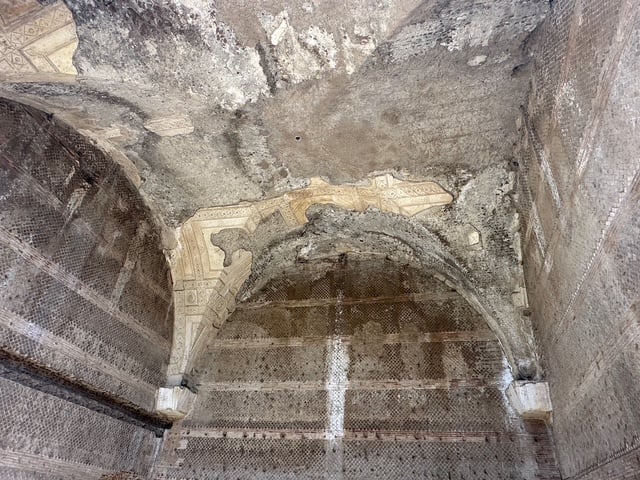
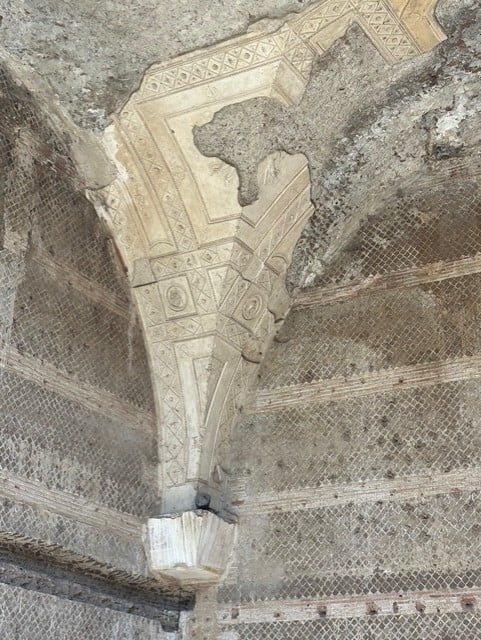
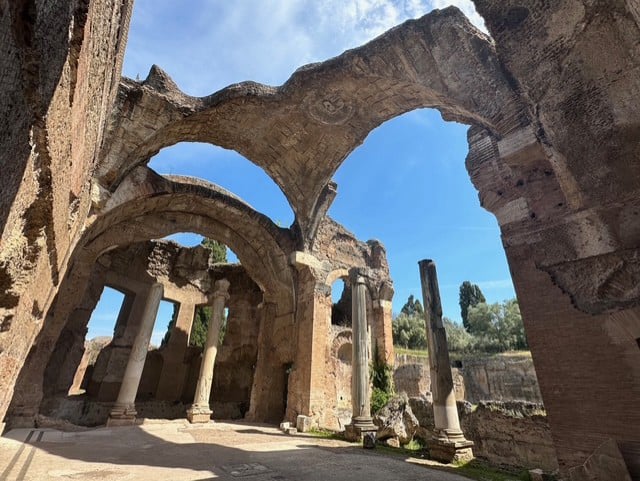
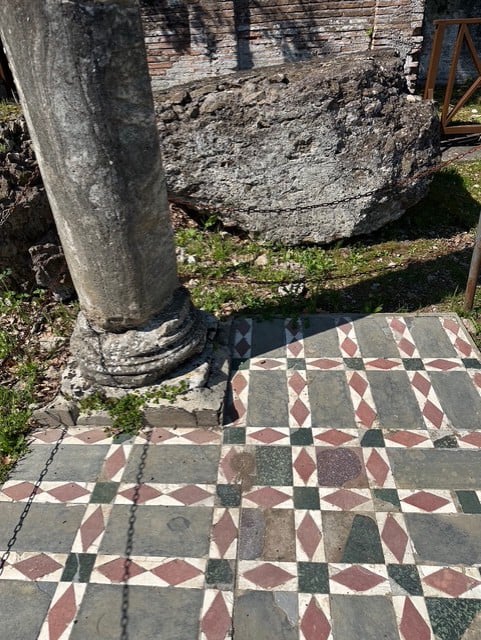
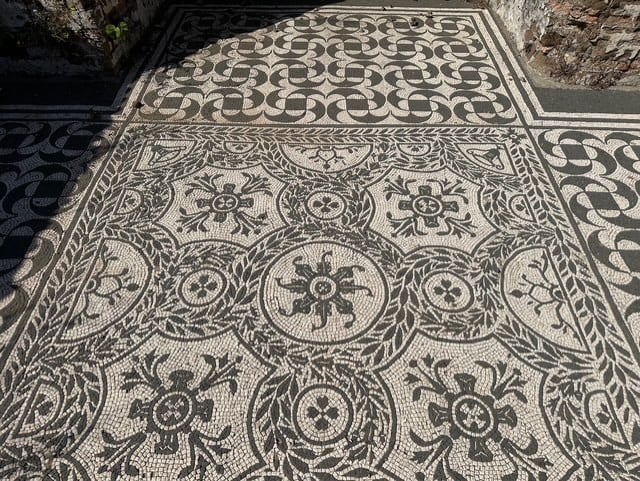
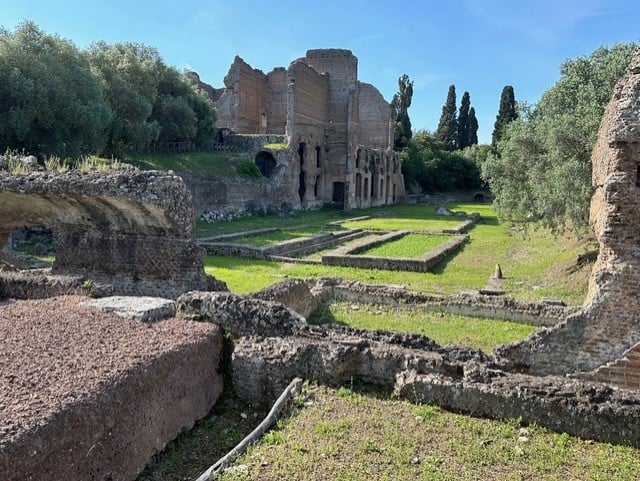
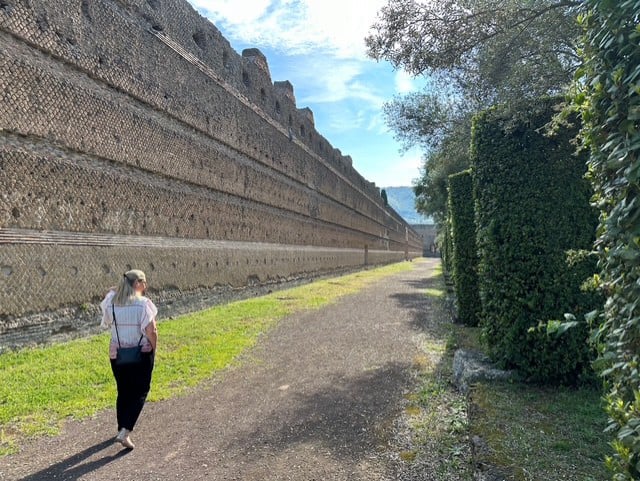
The site of Hadrians Villa in Tivoli (also known under the name Villa Adriana) a little outside Rome will leave you breathless. This beautiful place gives you a peak into the wealth, ingenuity and craftmanship of the roman empire under emporer Hadrian.
This is definately a place to visit!
Ticket booking link.
You can find pictures and directions at the bottom of this page.
THE HISTORY OF HADRIANS VILLA
Introduction
Hadrian’s Villa, known in Italian as Villa Adriana, stands as one of the greatest architectural complexes of the Roman Empire. Located in Tivoli, about 30 kilometers east of Rome, the villa was constructed during the reign of Emperor Hadrian (117–138 CE) and reflects not only his personal tastes but also the broader ambitions of Roman imperial architecture. Over time, it became a symbol of cultural fusion, technological prowess, and imperial grandeur, and even today it remains a site of both scholarly fascination and public wonder.
Background: Emperor Hadrian
Before delving into the villa itself, it is important to understand the figure behind it. Publius Aelius Hadrianus, known simply as Hadrian, was the Roman Emperor from 117 to 138 CE. Unlike many of his predecessors, Hadrian was deeply interested in culture, philosophy, and architecture. He was a passionate traveler who spent much of his reign touring the provinces of the empire, from Britain to the East, and he brought back a wide array of influences to Rome.
Hadrian’s reign was characterized by consolidation rather than expansion. He is best remembered for fortifying the empire’s frontiers (most notably through the construction of Hadrian’s Wall in Britain) and for investing heavily in infrastructure and cultural projects. His interest in Greek culture, known as philhellenism, played a significant role in shaping the design of his villa.
Origins and Construction of the Villa
Construction on Hadrian’s Villa began around 118 CE, early in Hadrian’s reign, and continued throughout his time as emperor. The site chosen for the villa had previously hosted a Republican-era villa, but Hadrian envisioned something far grander — a vast complex that would serve as a personal retreat from the political pressures of Rome.
Unlike the more formal palaces within the capital, Hadrian’s Villa was designed as a private paradise, sprawling over at least 120 hectares (approximately 300 acres) at its peak. It combined elements from many cultures Hadrian had encountered during his travels: Greek, Egyptian, and Roman motifs coexisted seamlessly within the grounds.
The villa was not a single building but rather a vast collection of structures, including palaces, theaters, baths, libraries, temples, barracks, and extensive gardens and pools. Each part of the complex served a specific function, from state ceremonies to private meditation.
Architectural Highlights
One of the most impressive aspects of Hadrian’s Villa is its variety and innovation in architecture. The site includes numerous remarkable structures:
The Canopus and Serapeum:
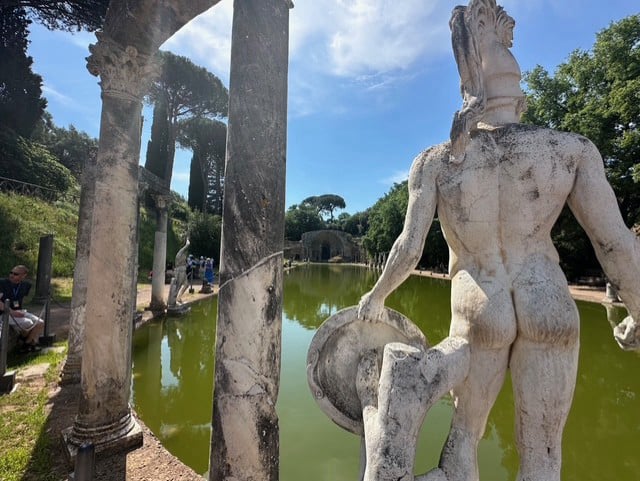
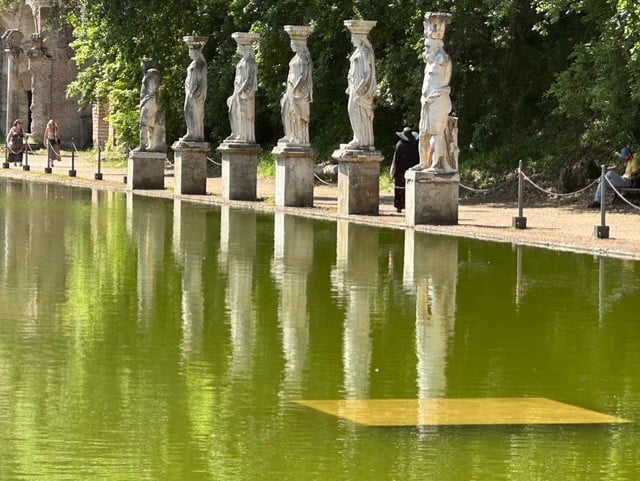
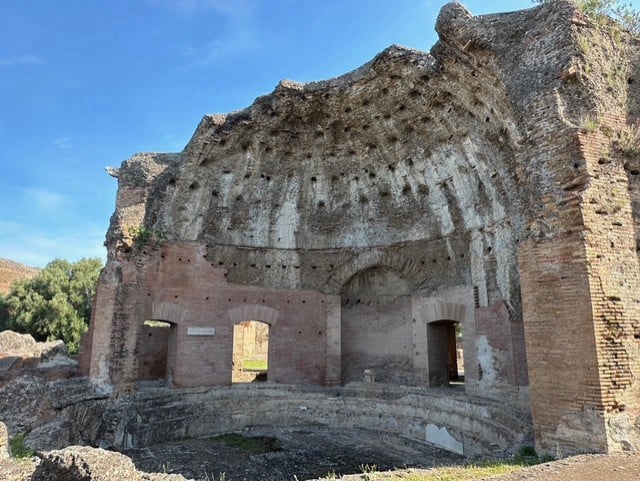
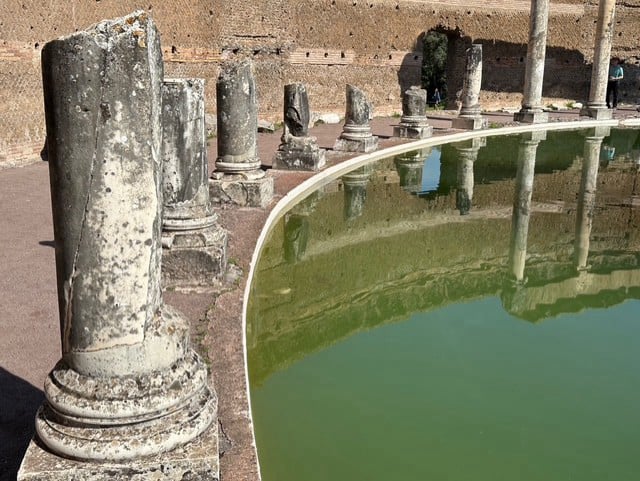
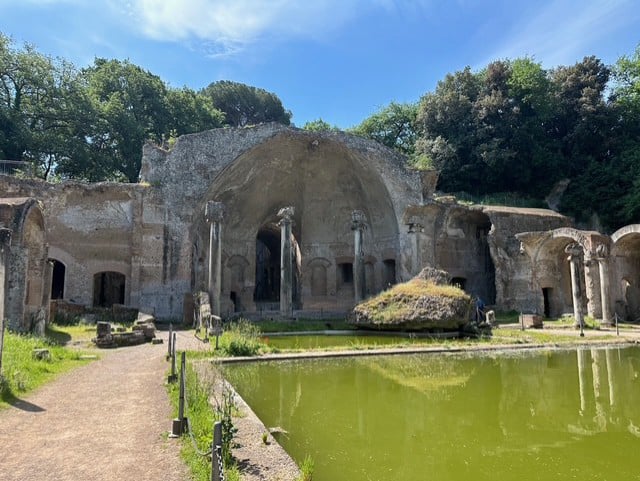
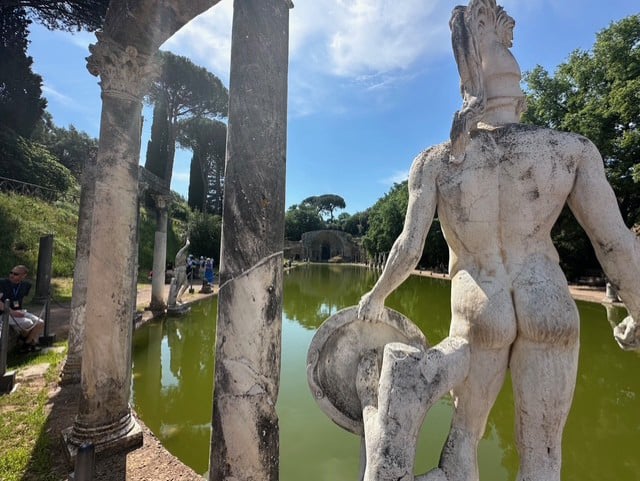
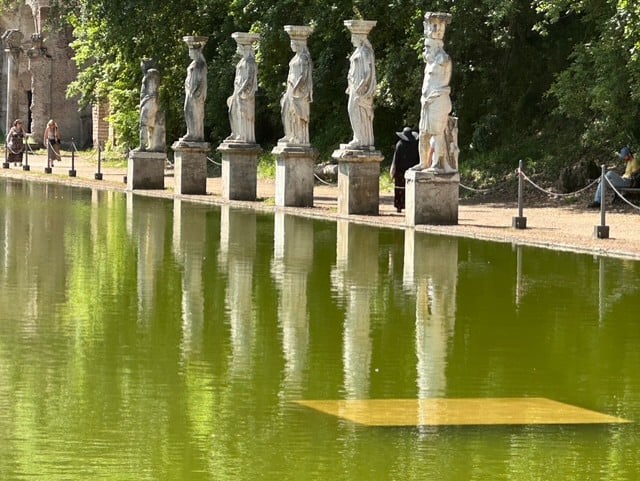
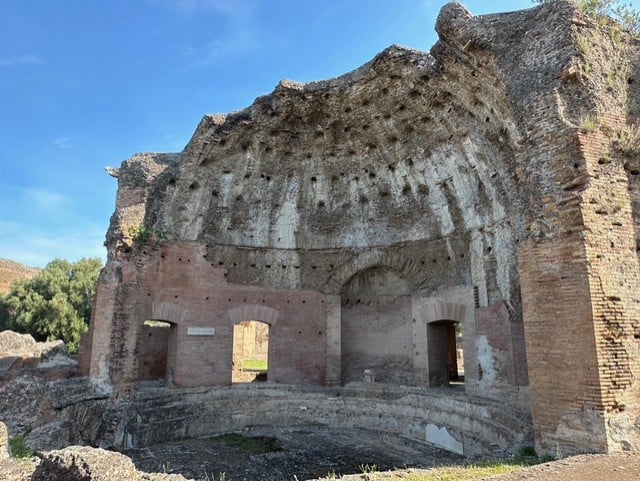
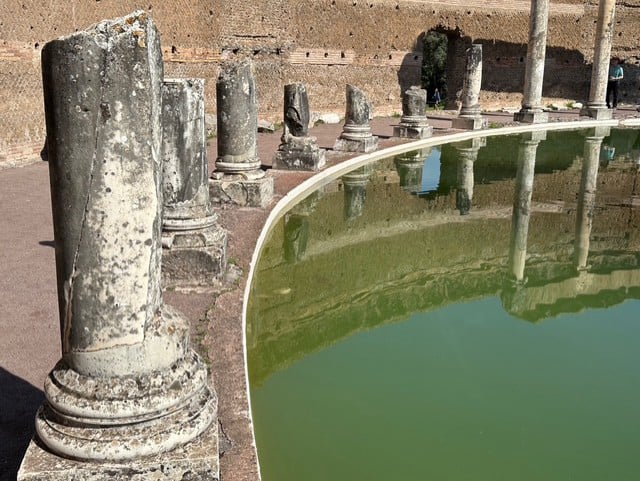
Perhaps the most famous section of the villa, the Canopus is a long, rectangular reflecting pool lined with columns and statues. It was modeled after a canal in Egypt, linking Alexandria to Canopus, and symbolized Hadrian’s admiration for Egyptian culture. At one end stood the Serapeum, a semi-circular domed building dedicated to the Greco-Egyptian god Serapis, which was used as a dining hall.
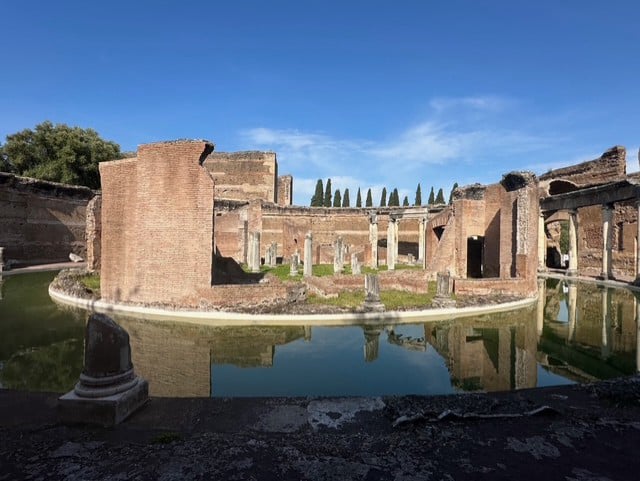
The Maritime Theatre (Teatro Marittimo): This small circular island was surrounded by a narrow moat and encircled by a colonnaded portico. It featured a miniature villa on the island itself, complete with its own tiny atrium, baths, and living quarters. It is believed to have been a private retreat for Hadrian, embodying his desire for solitude and reflection.
The Hall of Philosophers (Sala dei Filosofi):
This was a large hall likely intended for discussions, debates, or lectures — an embodiment of Hadrian’s interest in philosophy and intellectual life.
The Imperial Palace:
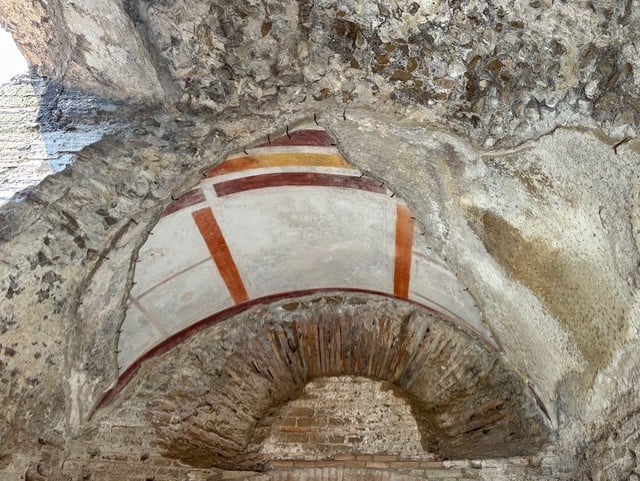
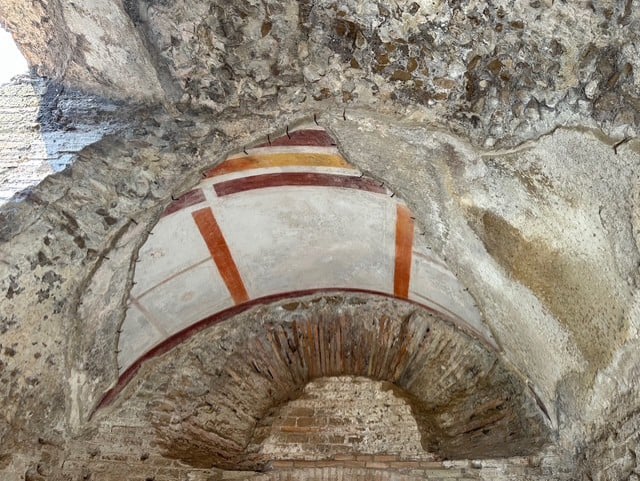
Serving as Hadrian’s official residence within the villa, the palace was connected to other major structures by covered walkways and was richly decorated with frescoes, mosaics, and precious marbles.
The Piazza d’Oro (Golden Court):
A luxurious garden complex surrounded by elegant colonnades and a richly decorated hall, which may have served as a reception area for honored guests.
The Baths:
Several bath complexes (the Small Baths and the Great Baths) featured advanced Roman hydraulic engineering, with underfloor heating (hypocaust) systems and a variety of pools (cold, warm, and hot).
Each structure displayed a mastery of engineering and artistic craftsmanship, while also serving as a symbol of Hadrian’s eclectic and sophisticated taste.
Cultural and Symbolic Significance
Hadrian’s Villa was more than just a lavish residence; it was a statement of imperial ideology and personal philosophy. Hadrian envisioned the villa as a microcosm of the Roman Empire, incorporating the best elements of its many cultures.
The villa’s design reflected Hadrian’s belief in cosmopolitanism — the idea that Roman identity could embrace a diversity of peoples and traditions. By incorporating Greek theaters, Egyptian temples, and Roman bathhouses into one sprawling estate, Hadrian sent a powerful message about the unity of the empire under his rule.
Moreover, many of the artworks and architectural forms had symbolic meanings. Statues of gods and heroes adorned the villa, serving both decorative and ideological purposes. Copies of famous Greek sculptures and Egyptian sphinxes stood side by side, underscoring the emperor’s role as a cultural mediator between East and West.
Life at the Villa
Hadrian’s Villa was not merely a retreat for the emperor himself; it was a bustling community. Hundreds, if not thousands, of people lived and worked there, including soldiers, slaves, artisans, courtiers, and scholars. Elaborate feasts, theatrical performances, and philosophical discussions were likely common occurrences.
Given Hadrian’s reputation for intellectual pursuits, it is reasonable to assume that the villa also hosted gatherings of learned men. Greek philosophers, Roman senators, and visiting dignitaries would have discussed politics, art, and philosophy within its gardens and halls.
It is also speculated that Hadrian’s beloved companion, Antinous, spent time at the villa. After Antinous’s tragic death in 130 CE, Hadrian deified him, and it is possible that parts of the villa — especially the Canopus — were dedicated to his memory.
Later History and Decline
After Hadrian’s death in 138 CE, the villa continued to be used by successive emperors, including Antoninus Pius and Marcus Aurelius. However, by the late Imperial period, it began to fall into neglect. The capital’s political gravity shifted, and with it, attention moved away from Hadrian’s retreat.
During the fall of the Western Roman Empire in the 5th century, much of the villa was abandoned. Over time, earthquakes, weathering, and human activity contributed to its deterioration. In the Middle Ages, the site was used as a quarry, with its valuable marble and building materials repurposed for churches, castles, and other structures.
Renaissance artists and architects, fascinated by ancient Rome, “rediscovered” Hadrian’s Villa. Figures such as Raphael and Pirro Ligorio studied its ruins, which inspired Renaissance and Baroque architectural styles.
In the centuries that followed, systematic excavations revealed the villa’s immense scale and artistry. However, looting and unregulated digs also led to the loss of many priceless artifacts.
Modern Era: Preservation and UNESCO World Heritage Site
Today, Hadrian’s Villa is recognized as one of the most important archaeological sites of the ancient world. It was designated a UNESCO World Heritage Site in 1999, with the organization praising it as “an exceptional complex of classical buildings” that represents the culmination of Roman architecture.
Ongoing archaeological research continues to reveal new insights into the villa’s history and significance. Conservation efforts seek to preserve what remains of its structures, mosaics, and sculptures for future generations.
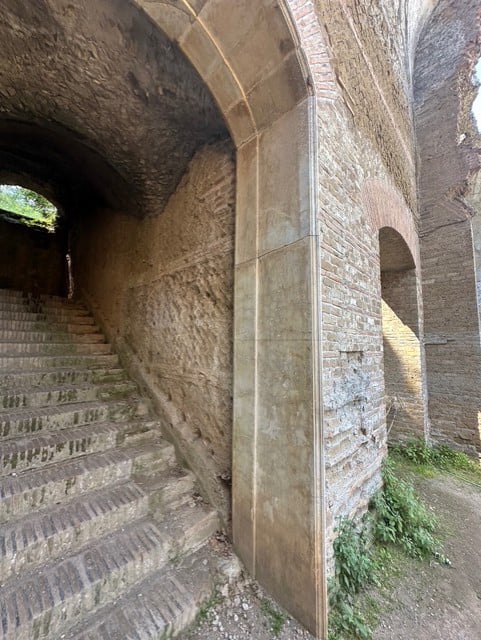
Visitors to the site can walk among the ruins and imagine the grandeur that once was: reflecting pools glistening in the sun, marble statues casting long shadows, and emperors contemplating the fate of their empire.
Conclusion
Hadrian’s Villa stands as a testament to the vision of an emperor who sought to bring the world’s cultures together under the banner of Rome. It reflects not only the political power and technological capabilities of the Roman Empire but also the personal tastes, ideals, and humanity of Hadrian himself.
More than just an archaeological relic, the villa offers a profound glimpse into a world where art, philosophy, politics, and architecture intertwined. Even in ruins, Hadrian’s Villa continues to inspire awe, reminding us of the enduring legacy of Rome and the dreams of those who shaped it.
Hadrians Villa is not hard to find and there are plenty of parking outside the site.