This beautiful city is the birthplace of St. Francis, who founded the Franciscan religious order in the town in 1208, and St. Clare (Chiara d'Offreducci), the founder of the Poor Sisters, which later became the Order of Poor Clares after her death.
Religious pilgrims have come here for centuries to visit the Basilica of San Francesco (where St. Francis is buried) and the Basilica of Santa Chiara (to see the tomb of St. Clare). Visit the Eremo delle Carceri to see caves where medieval hermits withdrew from the world.
You can find pictures and directions at the bottom of this page.
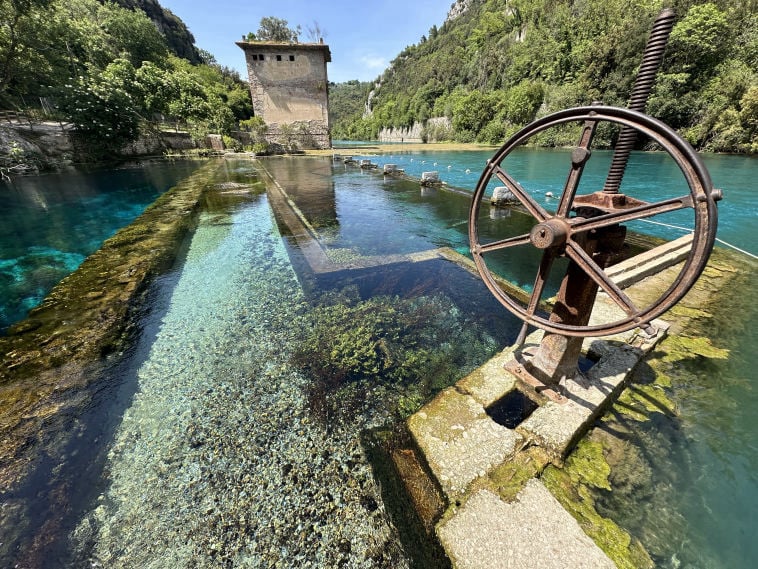
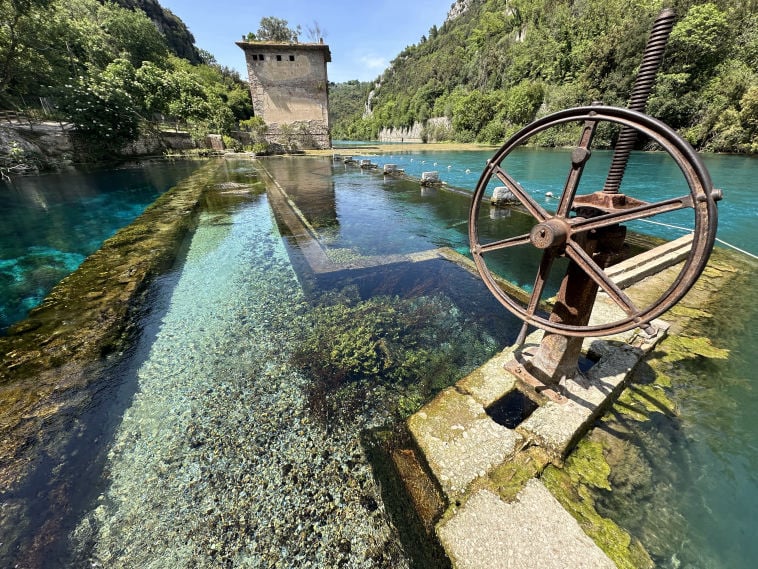
Nestled along the emerald waters of the Nera River in Umbria, Italy, the hamlet of Stifone is a hidden gem steeped in history and natural beauty. With roots tracing back to Roman times, this small village offers a unique glimpse into Italy’s rich past and its harmonious relationship with nature.
Ancient Origins and Roman Significance
Stifone’s strategic location along the Nera River made it an important site during the Roman era. Archaeological discoveries reveal the presence of a Roman shipyard, believed to have been constructed during the First Punic War in the 3rd century BCE. This facility likely served as a hub for building and launching vessels, capitalizing on the river’s navigability to transport goods and troops toward Rome via the Tiber River.
The shipyard’s remnants, including an artificial channel with carved stone walls and mooring holes, attest to the advanced engineering skills of the Romans. Historical accounts by Tacitus and Strabo further confirm the Nera River’s role in facilitating trade and military movements during this period.
Medieval Development and Economic Activity
Between the 14th and 16th centuries, Stifone experienced significant growth under the influence of the Silori family, a prominent lineage from nearby Narni. They established agricultural estates and constructed homes for farmers and artisans, shaping the village’s socio-economic structure.
The abundance of water sources in the area led to the proliferation of watermills, with the Mola Alberti being the most notable. These mills played a crucial role in processing grain and other agricultural products, bolstering the local economy.
Industrial Advancements and Modernization
In the 18th century, Stifone became home to a papal ironworks, established to refine ore extracted from the nearby Monte Santa Croce. This facility contributed to the region’s industrial development and provided employment opportunities for the local population.
The late 19th century saw further advancements with the construction of two hydroelectric power plants in 1892, among the first in Italy. These plants harnessed the area’s abundant water resources to generate electricity, illuminating the town of Narni and marking a significant step toward modernization.
Cultural Heritage and Natural Beauty
Today, Stifone is celebrated for its picturesque landscapes and well-preserved historical sites. Visitors can explore the narrow cobblestone streets, admire traditional stone houses adorned with vibrant flowers, and experience the tranquility of the surrounding nature.
The village’s proximity to the Gole del Nera (Nera Gorges) offers opportunities for hiking, cycling, and birdwatching, making it a haven for nature enthusiasts.
Key Attractions in Stifone
Roman Shipyard: An archaeological site featuring remnants of a Roman-era shipbuilding facility, highlighting the village’s historical significance.
Mola Alberti: The most prominent of Stifone’s historic watermills, reflecting the village’s agricultural heritage.
Church of Santa Marina: A local church housing 18th-century altarpieces, offering insight into the village’s religious and artistic traditions.
Natural Springs and Pools: Crystal-clear waters ideal for swimming and relaxation, showcasing the area’s natural allure.
Conclusion
Stifone stands as a testament to the enduring legacy of Italy’s historical and natural treasures. From its Roman roots to its medieval development and industrial advancements, the village encapsulates a rich tapestry of cultural heritage. Its serene environment and historical landmarks make it a captivating destination for those seeking to connect with the past amidst the beauty of the Umbrian landscape.
Keep an eye out for Stifone when you are getting close, it is easily overlooked.
DO NOT drive down to the city, but park on the main road as the town is NOT build for cars!